Digital marketing is how you get found online, build trust, and turn that attention into calls, leads, bookings, or sales.
If you are searching what is digital marketing and how to start, you do not need ten platforms. You need one clear plan and a simple system you can measure.
Download the Digital Marketing Starter Kit
Get the step-by-step checklist and 30-day plan to start digital marketing without the chaos.

TL;DR: How to Start
- Choose one goal and one audience first; clarity guides every channel and message.
- Build one landing page that converts: clear offer, proof, single CTA, tracking set up before ads.
- Focus on one main channel for 60 to 90 days; avoid spreading effort across everything.
- Track what matters: conversions, then engagement; use CPL, CPA, and ROAS to judge efficiency.
- Use the "What Is Digital Marketing and How to Start" checklist: test weekly, improve one thing, and automate follow-up.
What Is Digital Marketing?
Digital marketing (also called online marketing) is the promotion of brands using the internet and other forms of digital communication.
That includes:
- Websites
- Social media
- Search engines
- Web and mobile ads
- Text and multimedia messages
- Online video
If a marketing campaign uses digital communication, it counts as digital marketing.
When someone asks what is digital marketing and how to start, what they usually mean is this:
“How do I get customers online without wasting time or money?”
That is the question this guide answers.
Digital marketing in one sentence
Digital marketing is using online channels to attract the right people, earn their trust, and move them toward a clear action.
What digital marketing is not
Digital marketing is not:
- Posting without a goal
- Running ads to a homepage that does not convert
- Buying followers
- Doing “SEO tasks” without building useful pages
- Guessing
Digital marketing is a system. Not a slot machine.
A quick example
Let’s say you run a local plumbing business.
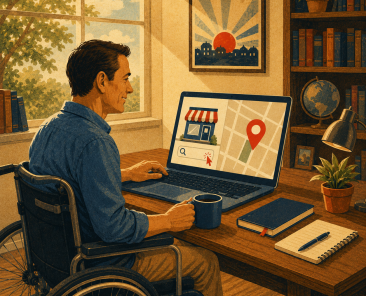
- Someone searches “hot water tank repair near me.”
- They click your Google listing or your website.
- They land on a page that explains your service, shows reviews, and offers a clear “Call Now” or “Request a Quote.”
- They contact you.
- You follow up fast and book the job.
That flow is digital marketing.
Not random posting. Not chasing trends. A clear path from search to trust to action.
What Does Digital Marketing Do?
Digital marketing helps people move from “I have a problem” to “I trust you” to “I am ready to act.”
Here is the simple customer journey:
- Awareness: I have a problem
- Consideration: I am comparing options
- Decision: I am choosing who I trust
- Action: I call, book, or buy
- Loyalty: I return and refer others
Digital marketing supports every step.
If you are learning what is digital marketing and how to start, this is the mindset shift:
Digital marketing is not one tactic. It is a system that helps people move forward.
The 3 big jobs digital marketing does
- Helps people find you
- Helps people trust you
- Helps people take action
That’s it. Everything else is just tools.
How Digital Marketing Works (The Big Picture)
Think of your marketing like a hub and trails.
- Hub: your website or landing page
- Trails: the channels that bring people in (search, social, email, ads)
- Fuel: content and proof that builds trust
- Compass: tracking, so you know what is working
When those parts line up, growth becomes repeatable.
If you skip the hub and run straight to “more content” or “more ads,” you usually get busy without getting paid.
This is why so many people keep searching what is digital marketing and how to start. They were given tactics, not a system.
Digital Marketing Mix (The Core Pieces)
A simple digital marketing mix often includes:
- Email campaigns
- Social media outreach
- Web and mobile ads
You can use one or many, but the goal stays the same: reach the right people, build trust, and guide them to action.
Digital Marketing vs Traditional Marketing
Digital marketing shows up on a computer, phone, tablet, or other device.
It can include:
- Online video
- Display ads
- Search engine marketing
- Paid social ads
- Organic social media posts
Traditional marketing is usually offline, such as:
- Magazine ads
- Billboards
- Direct mail
Television is often treated as traditional, even though it is a screen.
The big difference
Traditional marketing can be harder to measure.
Digital marketing is easier to track, test, and improve.
Inbound Marketing vs Digital Marketing
These two get mixed up all the time.
Digital marketing (tool-first)
Digital marketing looks at the tools and channels and asks:
“How can this channel convert prospects?”
A digital marketing strategy might use many platforms, or focus on just one.
Inbound marketing (goal-first)
Inbound marketing is more holistic. It asks:
“What is the goal, and which tools help at each stage of the funnel?”
Example:
- Goal: increase website traffic to generate leads
- Tool: SEO
- Execution: create helpful pages like blogs and landing pages
The best answer
You do not have to choose.
Inbound marketing gives structure and purpose.
Digital marketing supplies the channels and tools.
Together, they work best.
Why Digital Marketing Is Important
Any marketing can help a business grow.
Digital marketing has become more important because digital channels are easy to access and part of daily life.
Benefits of digital marketing
Digital marketing helps you:
- Reach a wider audience
- Control costs and test small
- Measure results clearly
- Personalize messaging
- Build better connections with customers
- Make conversions easier and more convenient
Why it is often cost-effective
Digital marketing can have low upfront costs.
For example:
- One helpful blog post can bring visitors for months
- Email campaigns can run on a schedule
- Ads can start small and scale only when they work
B2B vs B2C Digital Marketing
Digital marketing works for both B2B and B2C, but the best practices can differ.
B2B tends to look like this
- Longer decision cycles
- Relationship building matters more
- Decisions are often logic and evidence driven
- More than one person may influence the decision
- Shareable, downloadable assets help (one-pagers, decks, case studies)
B2C tends to look like this
- Faster decisions
- Emotion matters more
- Offers and short-term messages can work well
- One-to-one brand connection matters (social, email, communities)
Important exception
High-ticket B2C (cars, home renovations, computers) often behaves like B2B.
It needs more serious, informative content and stronger proof.
The 7 Types of Digital Marketing (Complete Beginner Breakdown)
You do not need to master all of these today. You just need to know what they are so you can choose wisely.
1) SEO (Search Engine Optimization)
SEO is earning traffic from Google by creating pages that match what people search.
Good SEO is not tricks. It is clarity, usefulness, and structure.
2) Content marketing
Content marketing is creating helpful content that answers real questions:
- blog posts
- guides
- FAQs
- case studies
- videos
3) Social media marketing
Social media helps you stay visible and build trust.
For many businesses, social is better for awareness than direct leads. It can still work for leads, but it usually takes consistency.
4) PPC (Pay-Per-Click) advertising
PPC is paying to show up fast, often through Google Ads.
It works best when your landing page is strong and your tracking is correct.
5) Email marketing
Email builds long-term value because you own the list.
It is excellent for follow-up, repeat business, and referrals.
6) Automation and CRM follow-up
Automation is how you follow up faster and more consistently:
- confirmation emails
- reminders
- “still interested?” follow-ups
- review requests
7) Video marketing
Video helps people trust you faster.
It shows your people, your process, and your proof.
The simple way to group all of this
If the list feels big, group it into four buckets:
- Owned: your website, your email list, your content
- Earned: SEO rankings, reviews, shares, referrals
- Paid: ads, sponsored posts, paid placements
- Partner: affiliates, influencers, co-marketing
If you are still asking what is digital marketing and how to start, start with owned and earned first. Then add paid when your foundation is ready.
The 4 Types of Digital Marketing (A Simple Way to Organize Everything)
If the list above feels big, group it like this:
- Owned media: website, blog, email list
- Earned media: SEO rankings, reviews, shares, PR
- Paid media: search ads, paid social, display
- Partner media: affiliates, influencers, co-marketing
Beginner rule: build owned and earned first. Add paid once your foundation converts.
The Benefits of Digital Marketing (Deeper Breakdown)
Broad geographic reach
Online marketing can reach people anywhere, unless you restrict geography.
Cost efficiency
Digital marketing can cost less than traditional channels and gives you more control.
You can also update campaigns quickly when needed.
Quantifiable results
Digital marketing tools track performance automatically.
Examples of trackable results:
- Website visits
- Email open rates
- Clicks
- Form submissions
- Purchases
Easier personalization
Digital data can help you tailor messages based on interests.
Example:
- Campaign A: young families exploring life insurance
- Campaign B: entrepreneurs exploring retirement plans
Digital tools help segment and track behavior so you can send the right offer.
More connection with customers
Digital channels allow two-way communication.
Social comments, shares, and messages build buzz and loyalty.
Easier conversions
People can take action immediately.
They can click, book, or save your content and come back later.
Digital Marketing Metrics That Matter (Beginner Friendly)
If you measure the wrong numbers, you will feel busy but lost.
Start with these:
Awareness metrics
- Reach and impressions
- Website sessions
- Video views
Engagement metrics
- Time on page
- Click-through rate (CTR)
- Email open and click rates
- Comments and shares
Conversion metrics (the most important)
- Calls
- Form submissions
- Bookings
- Purchases
- Conversion rate
Efficiency metrics
- Cost per lead (CPL)
- Cost per acquisition (CPA)
- Return on ad spend (ROAS) if you run ads
How to Start Digital Marketing for Beginners (Step-by-Step)
This is the core of what is digital marketing and how to start.
Step 1: Pick one clear goal
Choose one main goal for the next 30 to 90 days:
- More calls
- More form leads
- More bookings
- More online sales
- More qualified traffic (only if you have a conversion plan)
One goal keeps you focused.
Step 2: Define your audience
Write this down:
- Who do I help?
- What problem are they trying to solve?
- What result do they want?
- What makes them hesitate?
Clear audience equals clear marketing.
Step 3: Build the foundation before you promote
This is where most beginners go wrong.
If you want a real answer to what is digital marketing and how to start, it starts here.
Landing page must-haves checklist
Your page should include:
- A clear headline that says what you do and who it is for
- A short list of services or outcomes
- Proof (reviews, testimonials, logos, case studies, before and after)
- A simple explanation of “how it works”
- FAQs that remove doubts
- A clear call to action (call, book, quote, buy)
- A fast load time and mobile-friendly layout
Tracking must-haves checklist
At minimum, track:
- form submissions
- phone call clicks (and ideally call tracking)
- bookings (if you use a calendar tool)
- purchases (if e-commerce)
If you do not track, you guess. And guessing gets expensive.
Step 4: Choose your first channel (start small on purpose)
This is the moment where people either build momentum or scatter.
Pick one channel that matches your goal.
If you need leads fast
- Google Search Ads can work quickly
- Only if the landing page is ready and tracking is set
If you want steady long-term leads
- SEO + one strong service page
- Plus 2 to 3 helpful support posts
If you want trust fast
- video + website proof
- then retargeting later (once you have traffic)
If you want repeat business
- email follow-up and a simple nurture sequence
This is why “one channel first” is the best answer to what is digital marketing and how to start.
Step 5: Launch, measure, improve
Launch something small that you can measure.
Track weekly:
- leads (calls, forms, bookings, sales)
- conversion rate
- cost per lead (if ads)
- which pages are getting traffic
- which traffic sources bring real leads
Then improve one thing at a time:
- headline clarity
- offer strength
- CTA placement
- page speed
- follow-up speed
If you keep improving, you win.
The Most Common Beginner Mistakes (And How to Avoid Them)
Mistake 1: Doing too many channels at once
Fix: one goal, one channel, 60 to 90 days.
Mistake 2: Paying for traffic before your page converts
Fix: build the landing page first, then run ads.
Mistake 3: Posting content with no next step
Fix: every piece of content should guide the reader to a clear action.
Mistake 4: Not tracking conversions
Fix: track calls, forms, bookings, and purchases.
Mistake 5: Forgetting follow-up
Fix: fast replies and simple automation.
The 30-Minute Setup (Do This Today)
If you are serious about what is digital marketing and how to start, do this in one focused session:
- Write your one-sentence offer (who you help + what result you deliver)
- Add one clear CTA button to your site (Book, Call, Request Quote)
- Put your top proof near the top (reviews or testimonials)
- Make sure your phone number is click-to-call on mobile
- Set up basic tracking for your main conversion
That is enough to make your marketing stronger right away.
The 7-Day Starter Sprint (Beginner Friendly)
Here is a simple week you can actually finish.
Day 1: Pick goal and audience
Day 2: Build or improve one service page
Day 3: Add proof and FAQs
Day 4: Set up tracking for calls and forms
Day 5: Create one helpful post or short video that answers a common question
Day 6: Choose one channel and publish or launch
Day 7: Review results and fix one weak spot
This is a clean path for what is digital marketing and how to start.
The 30-Day Build Plan (When You Want Momentum)
If you want a stronger foundation:
Week 1: Foundation
- one service page
- proof
- CTA
- tracking
Week 2: Content support
- 2 helpful posts
- 1 FAQ section update
Week 3: Distribution
- choose one channel
- publish consistently
- test one small paid boost only if the page converts
Week 4: Optimization
- improve conversion rate
- improve follow-up
- fix tracking gaps
- double down on what brought real leads
What We See Most Often With Our Clients
Here is the most common pattern we see when businesses try digital marketing.
The symptom
- They post content but leads are random
- They run ads but results feel expensive
- They get traffic but not inquiries
The cause
The foundation is weak:
- unclear offer
- weak proof
- confusing website path
- tracking is missing
- follow-up is slow
The fix
Before you push more traffic, tighten the system:
- one clear offer
- one page built to convert
- tracking that tells the truth
- fast follow-up
This is the difference between “doing digital marketing” and knowing what is digital marketing and how to start.
Common Beginner Mistakes (And How to Avoid Them)
Doing everything at once
Fix: one goal, one channel, 60 to 90 days of focus.
Paying for traffic before the page is ready
Fix: landing page and tracking first, ads second.
Posting without a conversion path
Fix: every post points to one page and one action.
Not following up fast
Fix: respond quickly, even with a simple confirmation message.
Quitting too early
Fix: measure weekly, improve monthly, stay consistent.
A Simple 3-3-3 Starter Framework (For Beginners)
There are different versions of “3-3-3” out there, so here is a simple one you can apply without confusion.
3 audiences (or segments)
Example:
- homeowners
- property managers
- commercial buyers
3 core messages
- Problem: what they are dealing with
- Solution: what you do
- Proof: why they should trust you
3 channels (keep it simple)
- one owned channel (website or email)
- one earned channel (SEO or reviews)
- one distribution channel (social or paid)
If you are learning what is digital marketing and how to start, this framework keeps you consistent.
Beginner Tools and Setup (Keep It Simple)
You do not need a huge tech stack.
Start with:
- A website or landing page builder you can manage
- Analytics and conversion tracking
- A simple email tool or CRM for follow-up
- A way to collect reviews
- A basic content workflow (one post or one video per week)
The goal is not fancy. The goal is repeatable.
DIY vs Hiring Help (When to Bring in a Pro)
DIY makes sense when
- you are early stage
- budget is tight
- you want to learn the basics
- you can commit time each week
Hiring help is worth it when
- you need results faster
- you plan to spend money on ads
- your website is not converting
- tracking is messy
- you want a system built properly
If you hire, look for someone who cares about conversions and tracking, not vanity metrics.
Conclusion: Your Next 3 Moves
If you are still asking what is digital marketing and how to start, do this next:
- Choose one goal and one audience
- Build one page that converts with proof and a clear CTA
- Choose one channel and track results weekly
You do not need more noise. You need a clean trail and steady steps.
FAQ: What Is Digital Marketing and How to Start
Digital marketing is promoting your business online to attract customers through search, social media, email, content, and ads.
Start with one simple landing page, a clear offer, proof, and one call to action. Then choose one channel.
Pick one goal, build one conversion page, choose one channel, and track calls, forms, or sales every week.
SEO, content marketing, social media, PPC ads, email marketing, automation, and video marketing.
No. Start with your website, reviews, and one strong service page. Add ads when your page converts and tracking works.
Paid ads can work fast if the page converts. SEO and content usually take longer but build stronger long-term momentum.