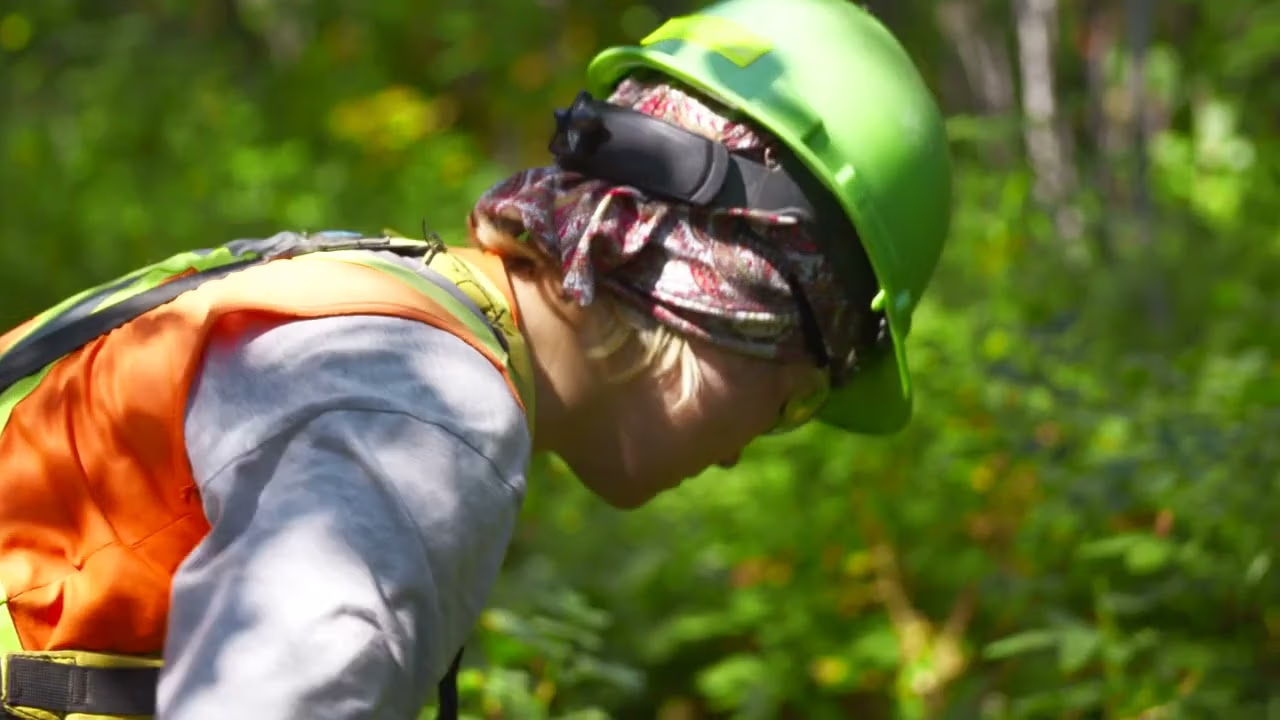
Some of the most important work is also the hardest to explain.
That was the challenge behind this documentary for BC OGRIS and Blackbird Environmental. The PNG Legacy Sites Restoration Program involved funding, partnership, fieldwork, and long-term restoration across northeast British Columbia. The work was real and measurable, but the story behind it had a lot of moving parts.
Our job was to shape that complexity into something people could follow. We created a documentary that brought the land, the restoration work, and the collaboration into one clear story, helping viewers understand not just what was happening, but why it mattered.
If you want, I can also do a second pass on the full case study and tighten any other sections that still sound too general.
The Trailhead (Quick Context)
This story began with work already happening on the land.
BC OGRIS is connected to funding and oversight for restoration efforts tied to legacy petroleum and natural gas disturbance sites in British Columbia. Blackbird Environmental was part of the on-the-ground restoration story, helping bring the work into view through real project activity in the field.
The documentary centred on the PNG Legacy Sites Restoration Program in northeast British Columbia. The program began in 2020, when the Province of BC and the petroleum and natural gas sector agreed to jointly support restoration work on historical disturbance features such as seismic lines and related impacts.
By 2022, there was already real progress to show, but the story itself was layered. It involved funding, restoration phases, collaboration, and visible work across a large region. Eagle Vision Agency was brought in to shape that into a film people could understand.
From the start, the goal was not simply to show activity. It was to make the bigger story clear.
What the Client Needed
This project called for more than a polished video.
BC OGRIS and Blackbird Environmental needed a documentary that could explain a complex restoration initiative in a way that felt clear, respectful, and easy to follow. The work itself was meaningful, but the story had a lot of moving parts. There was the funding model, the program structure, the restoration phases, and the collaboration tied to industry, government, and Treaty 8 priorities.
Without a strong narrative, that kind of work can be difficult for people to absorb. Important progress can get buried under technical details.
Success looked like a film that could connect those pieces. It needed to explain why the program exists, what had been done so far, and why the partnership behind it matters. It also had to stay grounded in the land and the reality of the work rather than drifting into vague messaging.
The timeline was about six months, so the process needed to stay focused from beginning to end.
In simple terms, the need was clear. The documentary had to turn a complex program into something people could watch, understand, and remember.
The Plan We Mapped Out
When a project carries this much context, clarity has to lead the process.
We began by identifying the core of the story. That meant narrowing the message to what people most needed to understand: why the program was created, who it brought together, and what progress had been made so far.
From there, we built the documentary around a simple arc. We moved from problem, to partnership, to work on the ground, to visible progress. That helped the film feel coherent without becoming overloaded.
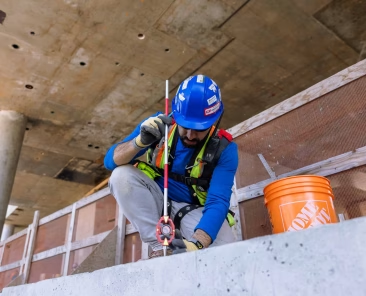
The visuals also needed a clear job to do. This was not a project where landscape shots could sit in the background and simply look nice. The footage had to help viewers understand the scale of the land, the physical reality of the work, and the broader purpose of restoration.
In post-production, we shaped the story for clarity. The goal was to keep the film informative without letting technical detail bury the message.
Throughout the process, collaboration stayed important. Because the subject was layered and the stakes were real, review and refinement helped keep the story aligned, respectful, and useful.
That structure gave the film a steady backbone. It made room for the work to speak without letting the story lose its shape.
What We Delivered
The deliverables were focused, but the job of the film was significant.
At the centre of the project was one documentary film. This became the main visual piece for explaining the work, the partnership, and the progress of the PNG Legacy Sites Restoration Program in a way that people could follow more easily.
That single film carried a lot of responsibility. It had to hold together restoration context, regional scope, collaboration, and visible results without becoming too dense or too broad.
Even though the deliverables list was short, the value of the project was wide. One well-made film can do a great deal when the message matters and the structure is strong.
How We Captured the Story (On-the-Ground Approach)
For a project like this, the land had to be part of the storytelling.
Northeast British Columbia was not just a backdrop. It carried the scale, the history, and the weight of the restoration effort. Because of that, we focused on footage that helped viewers understand the landscape in relation to the work happening within it.
The creative direction stayed grounded throughout. The film needed to feel clear and respectful, with the visuals supporting the message instead of overpowering it. That meant staying close to the real purpose of the program and showing the work in context.
We also made collaboration visible in the story. This initiative brought together public, industry, and Indigenous priorities in a shared restoration effort, and that needed to come through in a way that felt honest rather than overstated.
The approach stayed simple on purpose. Let the land set the tone. Let the work speak. Let the story move forward with clarity.
Because of that, the final piece feels rooted in place and built around real progress rather than abstract claims.
The Results (Proof You Can Feel)
No audience performance metrics were provided for the documentary itself, so we are not going to invent views, leads, or campaign results.
What we can point to is the strength of the story the film was built on.
The program reported meaningful progress. More than 154 kilometres of historical petroleum and natural gas disturbance in northeast BC were part of the restoration effort. In total, nine projects received funding for one or more of the program’s three phases: planning, treatment implementation, and performance monitoring.
There was also real investment behind that work. About $6.5 million in restoration funding supported the initiative. It also created employment for 218 individuals, including Treaty 8 First Nations members as well as preferred consultants and contractors.
That matters because the documentary was not built on theory alone. It was built on visible work, real collaboration, and measurable progress.
The film also gave the program a clearer public-facing story. It helped turn a dense initiative into something easier to communicate to stakeholders, partners, and communities.
So while film marketing metrics were not shared, the project still delivered something valuable: a stronger way to show why this work matters.
A Few Lessons From This Project
This project reinforced a few useful truths.
First, big programs need simple storytelling. The more moving parts a project has, the more important it becomes to strip the message down to what people truly need to understand.
Second, place matters. In restoration work, the land is not just scenery. It carries both the visual and emotional weight of the story.
Third, collaboration needs to be visible. If partnership is central to the work, the audience should be able to feel that shared effort in the final piece.
Fourth, structure matters as much as visuals. Strong footage helps, but the story still needs a clear path from beginning to end.
And finally, proof does not always live in a marketing dashboard. Sometimes the value of a film is that it helps people understand the work faster, trust the message more, and communicate it more clearly.
Taken together, those lessons point to something simple. Good documentary work does not just show activity. It helps people understand why the activity matters.
Ready to Build Something Like This?
If your organisation is doing important work and needs a better way to explain it, documentary storytelling can help turn complexity into clarity.
That is especially true when your project includes technical detail, multiple partners, or work happening across a large landscape. Eagle Vision Agency brings a calm process, strong visuals, and a clear story path to projects like these.
If you need help shaping meaningful work into a film people can understand and remember, reach out to start the conversation.