When a machine needs replacement tracks, its owner usually starts with what they know: the make, the model and the work waiting to get done.
That simple idea shaped our work with Dyne Industries Inc.
Logan Blackmore wanted to grow Dyne’s presence across Canada and make finding replacement rubber tracks easier. The business had product knowledge and customers to serve. Its website needed to bring those strengths online.
We helped develop Dyne’s brand, clarify its message and build an eCommerce catalogue around real customer searches. Then we connected that foundation with SEO, educational resources, advertising and ongoing website care.
By November 2025, the project had grown to more than 10,000 product listings across 452 equipment brands. During January 1 to November 5, 2026, the website recorded 58,469 sessions and 2,562 form-submission events.
Behind those numbers is a practical change: customers have more ways to find Dyne, understand their options and ask for the tracks they need.
Building Dyne Industries Around the Way Customers Search
Replacement rubber tracks are a specific purchase. A buyer needs more than a product photo and a general promise of quality.
They need to know whether the track fits their machine. They may need help checking dimensions, choosing a tread or understanding what to send with a quote request.
At the same time, the pressure is often immediate. A parked machine can delay work, disrupt a crew’s schedule and leave an owner searching for answers between other responsibilities.
Dyne serves people who understand that pressure: contractors, equipment operators, fleet managers, mechanics and rental businesses.
So our early conversations with Logan focused on those customers. What were they searching for? What made them hesitate? Which questions did the sales team need to answer? What should happen after someone reached the website?
Those questions gave the project a clear direction. Help buyers find a relevant track, understand the next step and reach someone who can confirm the fit.
Giving Dyne Industries a Clear, Consistent Brand
The work began with a broader look at how Dyne presented itself.
The brand needed to feel dependable, knowledgeable and ready for demanding work. It also needed to look consistent wherever customers encountered it, from the website to an email or business card.
The visual identity package included primary and secondary logos, a brand mark, supporting icons, fonts and a defined colour palette. Cara Bahan of Badlands Design Co. created the visual identity guide within the wider EV project.
We carried that direction into the website and supporting marketing materials.
The palette combined light neutral backgrounds, earthy tones, deep Insignia Blue and Identification Yellow. Together with bold headings, these choices gave Dyne a recognisable look suited to its products and audience.
That consistency supported a larger goal: make the online experience reflect the capable business behind it. Customers should recognise Dyne as they move between a search result, product page, resource and follow-up email.
Connecting Dyne Industries Products With the Right Machines
A consistent look needed an equally clear message.
We used StoryBrand principles to focus the writing on the customer’s situation. The buyer wants to keep equipment working. Worn tracks, uncertain fitment and confusing choices can stand in the way. Dyne helps them find a suitable replacement and move forward.
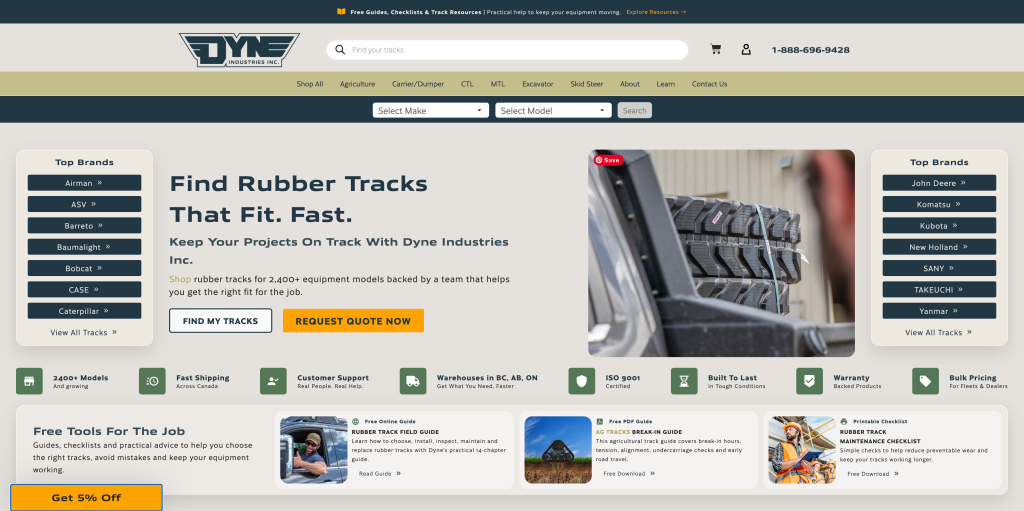
That thinking supported the promise, “Keep Your Projects On Track.”
It also gave the website a simple process:
- Find your tracks.
- Submit your quote.
- Receive your tracks.
The wording helps visitors understand what Dyne offers and what to do next. Product information, FAQs and calls to action support that same journey.
Marketing Made Simple helped connect the message to useful downloads and email follow-up. Someone ready to enquire could request a quote. Someone still researching could get practical help and stay connected.
Both paths respect the buyer’s stage. A contractor comparing options needs useful information before a sales conversation makes sense.
Helping Customers Find Dyne Industries Through SEO
The biggest website opportunity came from how customers search.
Early in the project, Logan shared examples such as “Cat 277C rubber tracks.” He also identified broader searches for skid steers, mini excavators, agricultural machines and carrier equipment.
That gave us a useful starting point. Buyers were describing their equipment, so the catalogue needed to speak the same language.
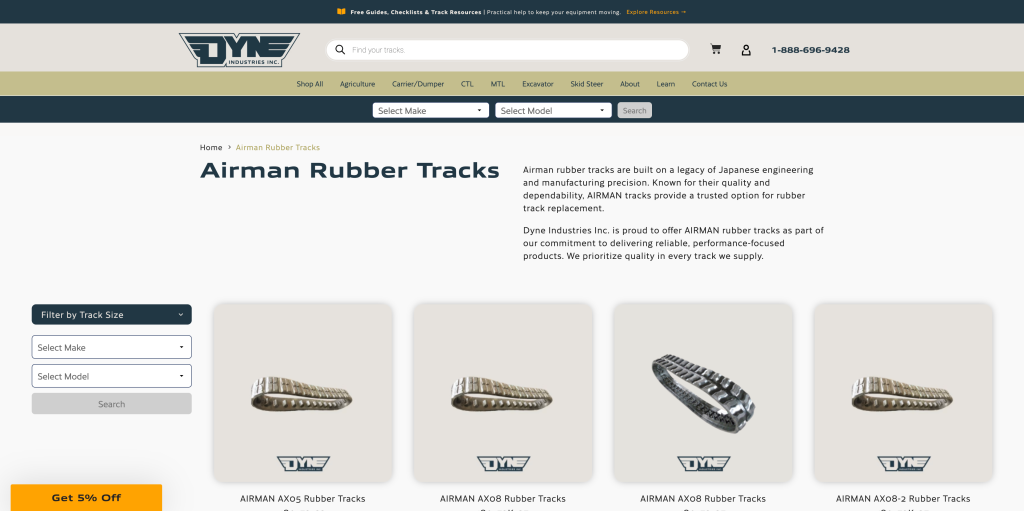
We organised product titles around the equipment brand, machine model, rubber tracks and track size. We also connected listings through brand destinations and size information.
A customer could begin with a familiar machine name rather than work backwards from an unfamiliar supplier code.
This approach also helped address an important feature of the business: one replacement-track option may serve several equipment applications. The website needed to connect those products with the machines customers recognised.
The result was a large catalogue of machine-specific listings, each providing another relevant starting point for a buyer.
Turning Dyne Industries Into a Practical Resource Hub
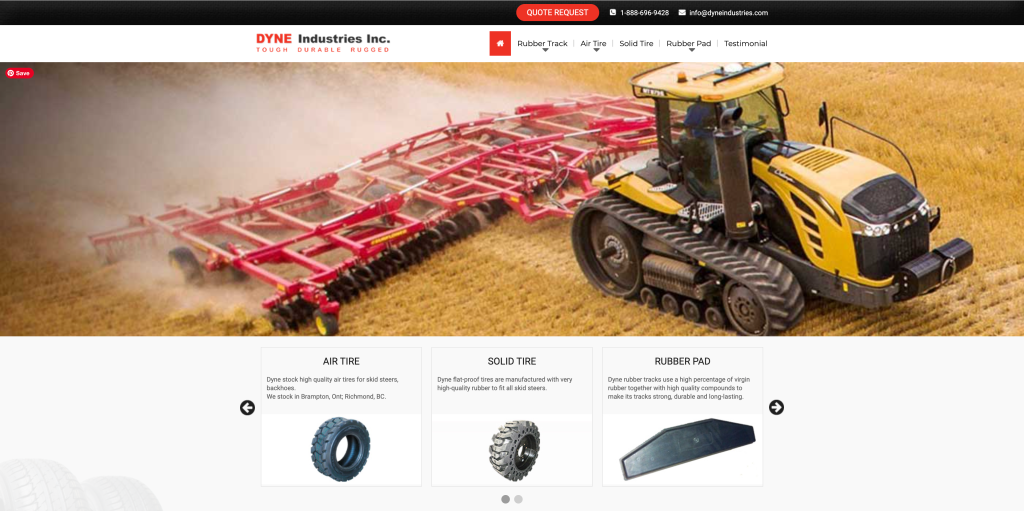
The website developed in stages. An earlier Wix build helped establish Dyne’s online presence before the larger catalogue project took shape.
As we tested product and quote features, we reviewed what the next stage required. The planned catalogue needed flexible product organisation, repeatable layouts and room for equipment-focused search pages.
We recommended moving to WordPress and WooCommerce to support that direction.
Before expanding the catalogue, we tested a small group of products. That allowed us to review the page structure and quote process with Logan before repeating it across thousands of listings.
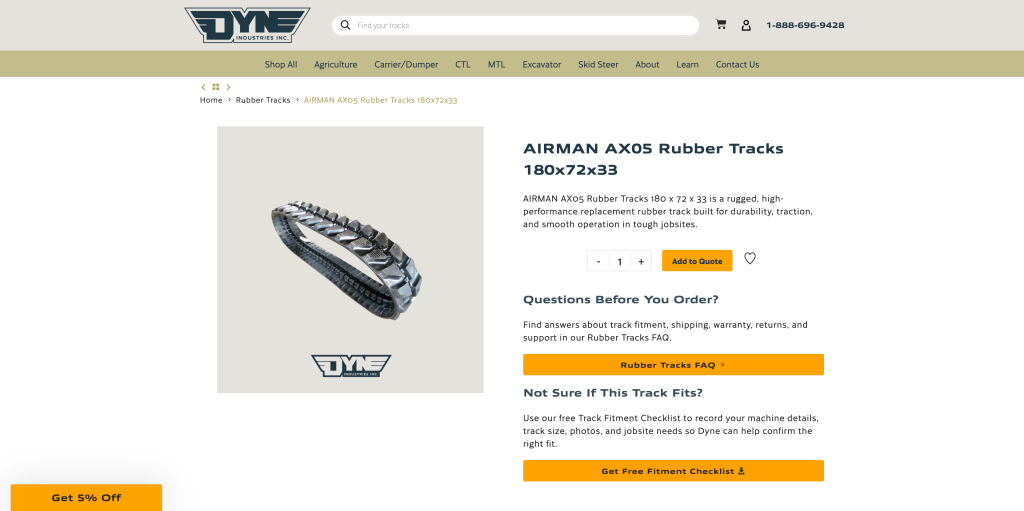
The resulting website centres on browsing tracks and requesting quotes. Buyers can review an option, add it to their quote request and provide details for Dyne’s team.
That process gives the customer a clear action while keeping fitment questions and the sales team’s knowledge part of the purchase journey.
Turning Product Knowledge Into Useful Pages
A catalogue this large required detailed preparation.
Our team organised brands, models, sizes, descriptions and track options. Four team members were working on product data during the build, while Logan helped review the information that depended on his equipment knowledge.
The product pages brought several useful details together:
- Machine names and track sizes.
- Width, pitch and link-count specifications.
- Listed equipment compatibility and replacement references.
- Tread descriptions and shipping information.
- Quote buttons, FAQ links and fitment support.
We also worked through duplicate listings, tread choices and imagery. Logan reviewed details such as zigzag options and whether photos showed the correct equipment type.
This collaboration mattered. A technically organised catalogue still needs the client’s product knowledge to make its information useful.
By November 2025, the project included more than 10,000 listings across 452 equipment brands. That scale describes the online catalogue, including machine applications and configurations, rather than 10,000 different physical track designs.
Keeping Product Knowledge Close to the Build
Logan’s feedback helped guide decisions throughout the work. For example, when reviewing the national landing page, he asked us to put C-Bar first in the tread comparison because it was Dyne’s most common option.
That detail shows why collaboration mattered. Our team brought website structure, design and search planning.
Logan brought knowledge of the products and the questions customers asked. Together, we could make the website more useful to the people buying tracks. It also gave us specific, practical improvements to make as the catalogue continued to develop.
Making the Catalogue Part of the SEO Strategy
SEO was built into the website’s structure.
The product titles, equipment-brand destinations and commercial landing pages gave Dyne ways to match different searches. A broad Canadian search could lead to the national page. A specific machine search could lead to a relevant product listing.
We made a deliberate decision to prioritise that product and brand structure ahead of the originally discussed volume of blog posts. It created the commercial foundation that future content could support.
Then we continued developing focused pages, including Rubber Tracks Canada and equipment-specific content.
Earlier SEO work had already shown progress. In our June 2025 Canadian rankings update, “rubber ag tracks” moved from position 12 to 6, while “rubber agricultural tracks” improved from 8 to 6. “Rubber tracks for multi terrain loaders” moved from 49 to 8.
Those were results from the work leading into the larger website launch. They helped show where focused content and equipment language were connecting with searches. We continued building on that direction through the catalogue and supporting pages.
The search data shows that the catalogue was gaining visibility. During January 1 to November 5, 2026, 4,819 product-page entries recorded a combined 32,118 Google search impressions.
An impression means a page appeared in search results. It doesn’t mean every appearance became a visit, but it shows that thousands of catalogue entries were reaching the search results where customers research equipment and tracks.
Becoming a Resource Customers Could Return To
Product pages answer an immediate question: what replacement track might fit this machine?
Customers also need help before and after that decision. They may be comparing options, checking damage, planning maintenance or preparing to install a new set.
We developed Dyne University as a place for that practical education.
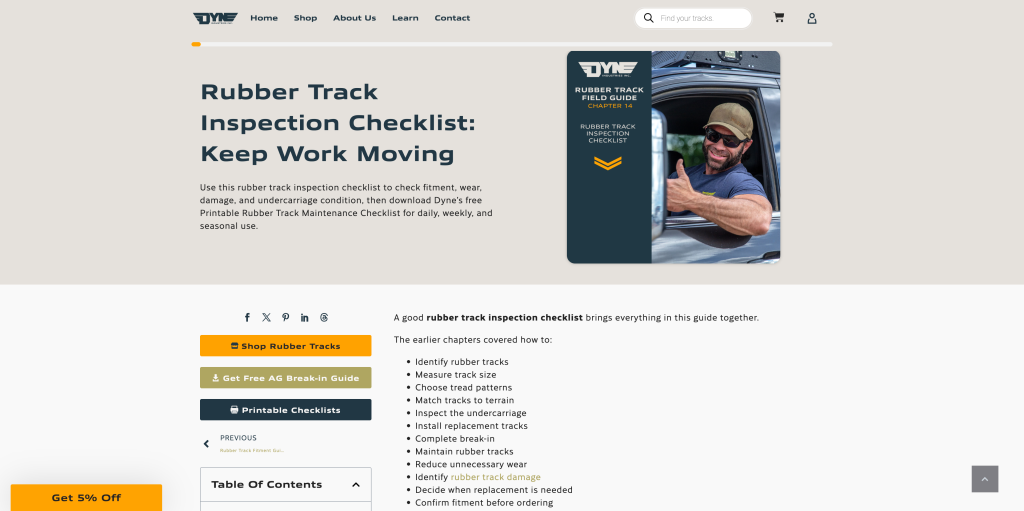
The content covers equipment, track selection, fitment, installation, maintenance, inspections and replacement. We also built a 14-chapter online rubber track field guide so customers could access specific topics as needed.
The online format gave each topic a useful home. A buyer could read one chapter, share it with a mechanic or return later with another question.
This supported Logan’s goal of helping customers throughout ownership. The relationship could continue after the quote and delivery, with information that helps people care for their tracks and prepare for future needs.
Giving Visitors a Useful Reason to Stay Connected
Educational content also created opportunities to build relationships with visitors who weren’t ready to order.
We developed resources such as the agricultural track break-in guide, printable maintenance checklist and fitment checklist. These offered something specific that customers could use in their work.
The break-in guide grew from a practical conversation with Logan. He wanted information customers could download and receive with their purchase paperwork.
That made it useful at more than one stage. It could help someone researching new tracks and support a customer who had just purchased them.
Email signup opportunities connected selected resources with follow-up. We also worked with Dyne and Logical Position on the downloadable-guide email experience.
The purpose was straightforward: give people worthwhile help, earn permission to stay in touch and provide a relevant next step when they needed tracks.
Bringing More Buyers to Dyne Industries With Google Ads
The website and SEO work developed alongside paid advertising.
Our earlier work included helping with account issues, tracking, campaign organisation and landing-page messaging. As the programme developed, we also coordinated with Logical Position on advertising and email marketing.
From January 1 to November 5, 2026, Google Ads accounted for 13,306 recorded website sessions. Bing Ads contributed another 4,560.
Organic search across search engines contributed 3,330 sessions during the same period. Brevo and Klaviyo email traffic added 1,076 sessions.
These channels gave customers several routes into Dyne’s website. The catalogue, landing pages and resources provided places for those visits to lead.
The connection matters. Advertising can introduce a buyer to Dyne, but the page they reach still needs to answer their question. Clear product details, useful guidance and a visible quote process help continue that conversation.
How Dyne Industries Recorded 2,562 Form Submissions
The 2026 report gives a view of how people used the website after the catalogue build.
| Recorded activity | January 1 to November 5, 2026 |
|---|---|
| New users | 52,404 |
| Website sessions | 58,469 |
| Page views | 82,033 |
| Product-list views | 12,030 |
| Individual product views | 7,796 |
| Form-submission events | 2,562 |
| Phone-click events | 239 |
These figures show discovery, browsing and contact activity. People were reaching the website, exploring the catalogue and taking steps towards a conversation with Dyne.
The form-submission figure measures recorded enquiry activity. It doesn’t represent a count of completed sales or unique customers.
The report covers one period, so it provides a clear activity snapshot rather than a before-and-after growth percentage. That keeps the result useful: a substantial website and marketing programme supporting thousands of visits and recorded enquiries.
Search Visibility Across Products and Education
The search results also show why the combination of commercial pages and educational content matters.
| Page | Google search impressions |
|---|---|
| Rubber Tracks Canada | 14,301 |
| Ditch Witch SK800 Guide | 9,285 |
| Agricultural Tracks Guide | 8,018 |
| Kubota Skid Loader Buyer’s Guide | 5,549 |
| How to Put Rubber Tracks on a Skid Steer | 5,480 |
| Rubber Tracks FAQ | 5,240 |
Across the exported landing-page rows, Dyne recorded a combined 142,104 impressions. Product pages contributed 32,118, while equipment-brand pages added 9,127.
The educational pages were appearing alongside the commercial catalogue. That gave Dyne opportunities to meet people researching equipment, learning about track care and looking for replacement options.
It also showed the value of writing around customer questions. Useful answers became part of Dyne’s search presence, with a route back to products and support when visitors were ready.
Supporting Dyne Industries With Ongoing Website Care
Our work continued after the build.
A growing catalogue and active marketing programme need regular care. We supported Dyne with plugin updates, security monitoring, virus and spam protection, troubleshooting and daily backups through our custom monitoring system.
There were practical challenges along the way. In February 2026, search activity and bots exposed a server limitation. We restored the original brand-and-machine search and blocked bots while reviewing the next hosting steps.
We also helped Logan assess hosting options as the website’s requirements changed.
When Google Ads flagged the website, we investigated, reviewed security scans, simplified tracking and worked with Logical Position through the appeal process. The advertising provider later confirmed the ads were back in good standing.
That ongoing support gave Logan a team to work through the decisions and interruptions with him. The website remained part of an active relationship, with continued attention to the systems supporting his customers and marketing.
A Website Built Around the Business
Dyne’s online presence now connects a recognisable brand, clear message, extensive product catalogue and practical customer resources.
The strongest part of the project is how those pieces support one another. Machine-focused listings help buyers find relevant options. Guides help them understand their choices. Advertising introduces more visitors. Quote tools make the next step clear. Ongoing care supports the website behind it all.
For Logan, the project developed from a simpler website into a broader platform for reaching and helping customers across Canada.
For the customer, the goal stayed consistent: find the right replacement tracks, get useful help and keep work moving.
If your website needs to make a complex product range easier to find and understand, we can help map the next step. Book a free consultation with EV Agency.