Some stories ask for more than a camera and a schedule. They ask for trust, care, and a team willing to listen closely.
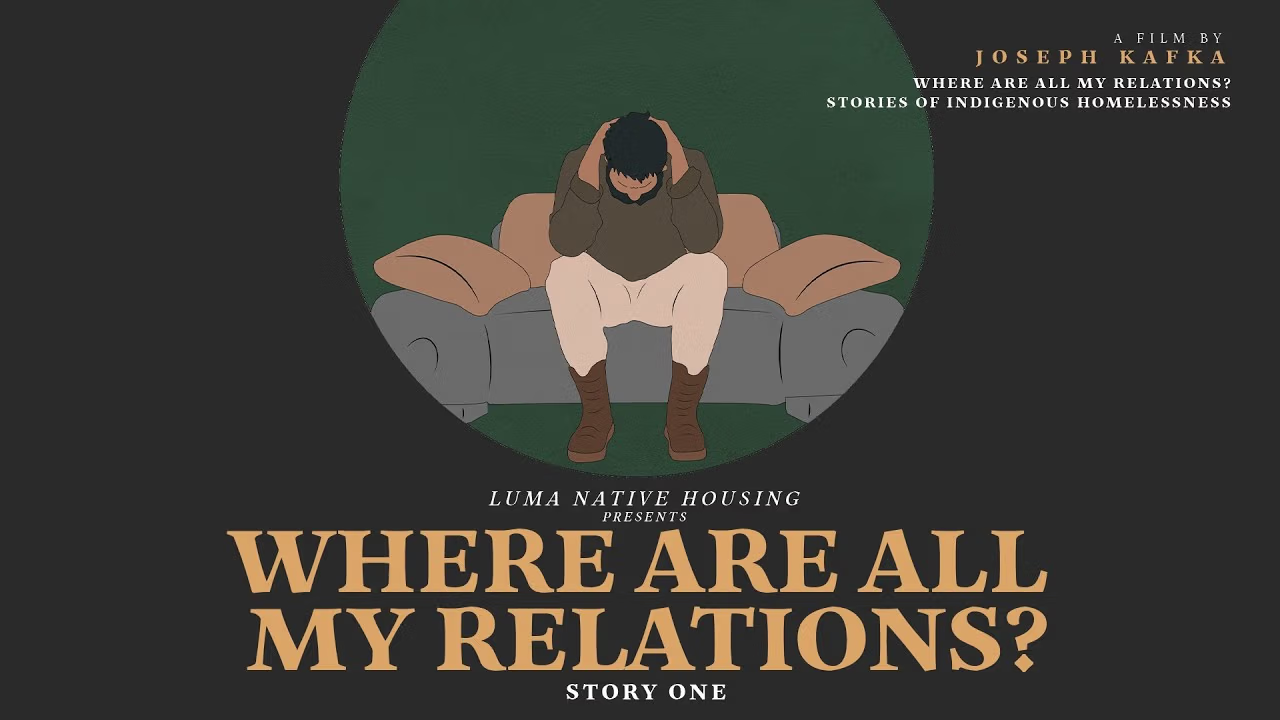
For BC Housing and Lu’ma Native Housing Society, we produced a documentary film project that brought forward Indigenous perspectives on homelessness in British Columbia through honest, person-centred storytelling.
The result was a long-form film and supporting video series built to deepen understanding, spark conversation, and make space for Indigenous-led voices to be heard.
TL;DR
- We helped produce a documentary film project that explored Indigenous homelessness through Indigenous perspectives, lived experience, and story.
- The final scope included one 60-minute film, 11 shorter episodes or segments, and one trailer.
- One of the strongest creative choices was a direct-to-camera interview style that made each story feel personal, close, and human.
- The project created a lasting film library that could support public education, community screenings, and deeper conversation.
- From concept and research to theatrical release, the work stretched across roughly three years.
The Trailhead
Some projects ask for more than production. They ask for care, patience, and the courage to tell the truth well.
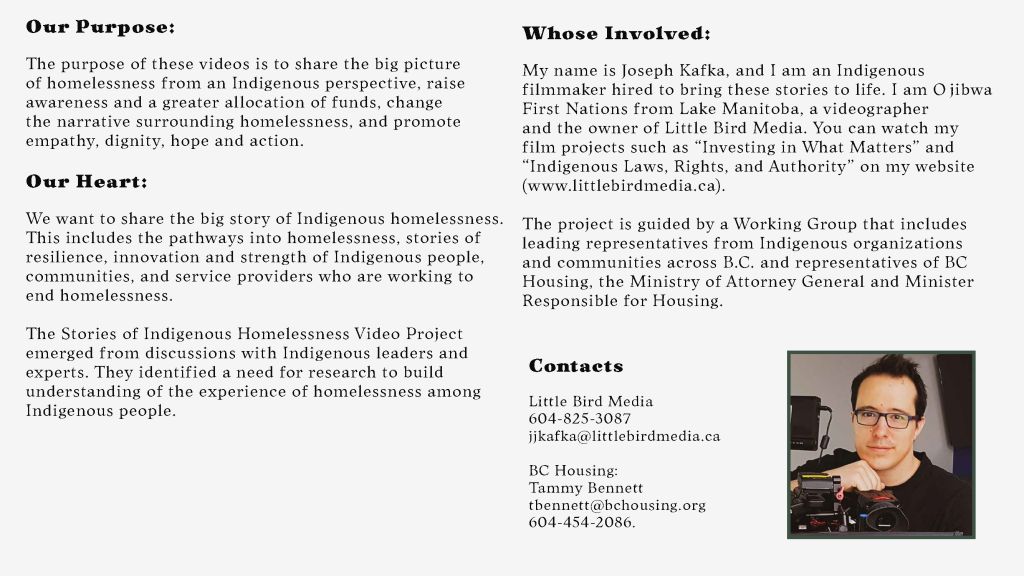
This project brought together BC Housing, Lu’ma Native Housing Society, and a broader working group with one clear goal: help people understand Indigenous homelessness through a wider, more human lens. From the start, the work was meant to move beyond surface-level awareness. It needed to create empathy, restore dignity, and open the door for deeper understanding and action.
The work took place across British Columbia from 2021 to 2023. Joseph Kafka, also known as Little Bird and now our Project Manager and Creative Director at Eagle Vision Agency, produced the film and helped guide the story from concept through release.
In the end, this was never just a film about housing. It was a story about relationships, identity, healing, and what home really means.
What the Client Needed
This was not a standard awareness campaign, and it could not be treated like one.
The challenge was bigger than simply sharing information. Too often, public conversations about homelessness are reduced to numbers, policy language, or short headlines. This project needed to slow that down and make room for Indigenous voices, Indigenous worldviews, and the deeper realities behind homelessness.
Success meant creating something people could feel. It had to be respectful, person-centred, and strong enough to support public education, screenings, and meaningful discussion. It also had to reflect Indigenous understandings of home, not just colonial ones tied only to shelter or structure.
That came with real responsibility. The subject matter required trust. The process needed guidance from Indigenous leaders and organizations. And the final film had to carry both truth and hope without turning pain into spectacle.
Because of that, this project needed a steady hand from start to finish.
The Plan We Mapped Out
When you are telling a story with this much weight, the process has to stay calm, clear, and respectful. That is how we approached it.
First, we grounded the project in purpose. We knew this series had to widen understanding, honour resilience, and help people see Indigenous homelessness through a more honest and relational lens.
Next, we worked within a collaborative structure. This was not a project we could shape in isolation. It was guided by Indigenous organizations, community voices, BC Housing, and public sector partners across B.C. That collaboration helped keep the work accountable to the people closest to the issue.
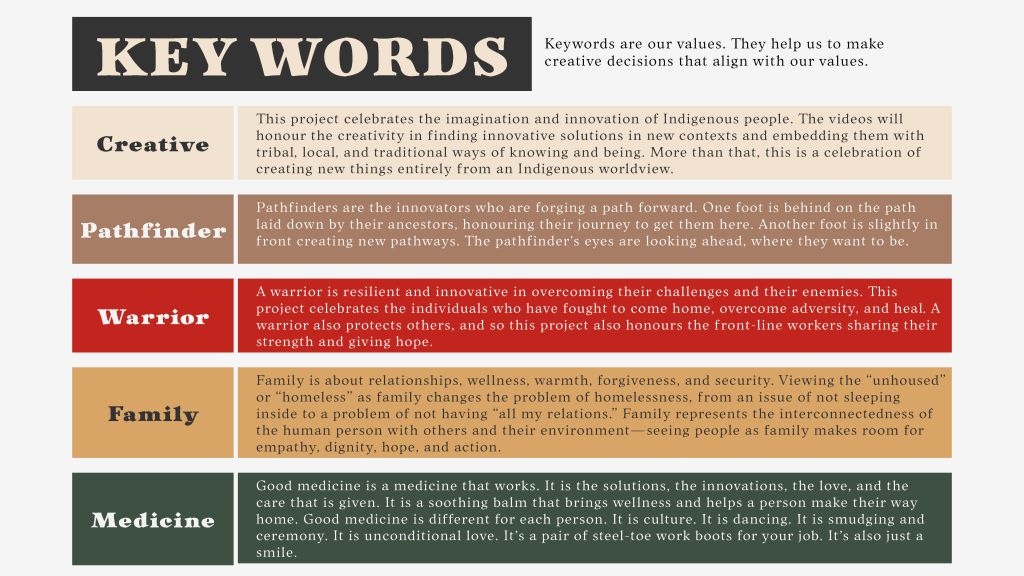
After that, we built a creative approach that stayed rooted in Indigenous values. Themes like family, healing, resilience, and pathfinding helped guide the tone and kept the project from slipping into generic documentary language.
Then, we shaped the interview style around closeness and trust. Instead of placing the audience at a distance, we chose a direct-to-camera approach that made it feel like each person was speaking face to face.
Finally, we built the deliverables in layers. The long-form film carried the full emotional and narrative weight of the story. The shorter episodes and trailer helped that message reach more people in more settings.
The plan was simple in theory, but it took discipline in practice: listen carefully, stay organized, work collaboratively, and let the story lead.
What We Delivered
This project needed more than one standalone piece. It needed a full storytelling package that could create depth, reach, and long-term value.
- 1 full-length 60-minute film
This gave the story room for nuance, context, and a deeper emotional arc. - 11 shorter episodes or segments
These made the project easier to share through screenings, education, outreach, and community discussion. - 1 trailer
This created a clear entry point and helped introduce the project to wider audiences. - Documentary interviews with direct audience connection
These helped keep lived experience at the centre and made the message land in a personal way. - A reusable content library for ongoing community conversation
This ensured the work could keep serving the client and community long after release.
Together, these deliverables turned one important story into a broader communication tool that could travel further and keep working over time.
How We Captured the Story (On-the-Ground Approach)
The creative approach mattered just as much as the final edit.
We were not trying to impress people with flashy production. We were trying to remove the camera as much as possible so people could speak directly, honestly, and with dignity. That decision shaped everything.
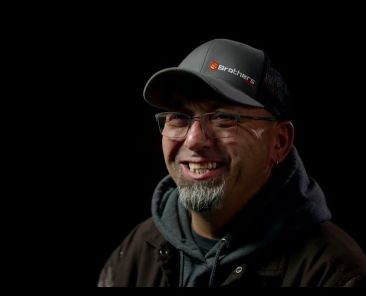
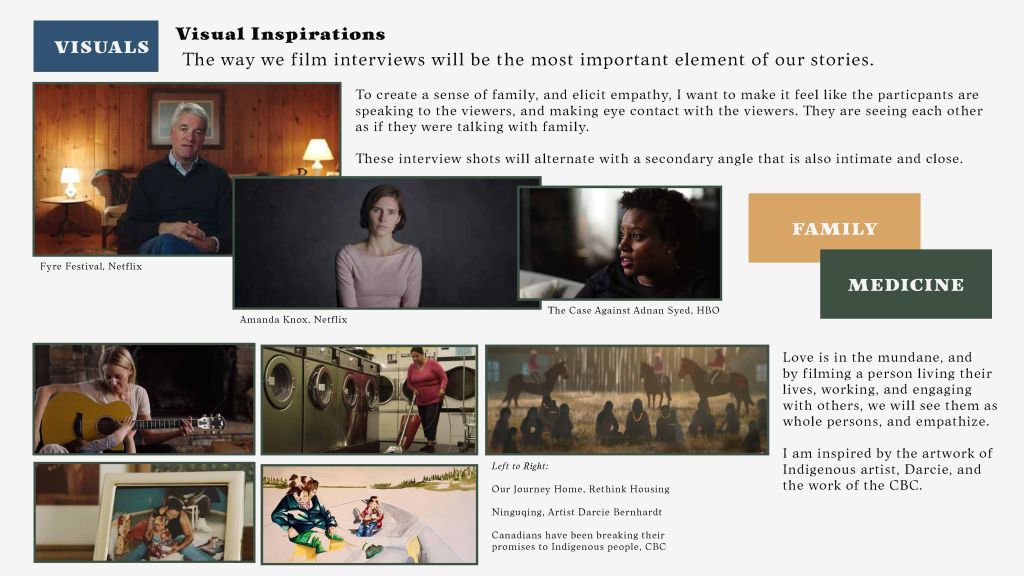
We used a rarely seen documentary interview style where subjects looked straight into the lens. The goal was to make the audience feel like they were listening to an aunty or uncle across the table. That direct eye contact created closeness, trust, and a deeper sense of connection. We also used a second intimate angle to keep the conversations feeling natural and human.
Beyond the interviews, we paid close attention to everyday moments. We wanted people to be seen as whole persons, not just voices attached to an issue. By filming them living, working, and engaging with others, the story became more grounded and more real.
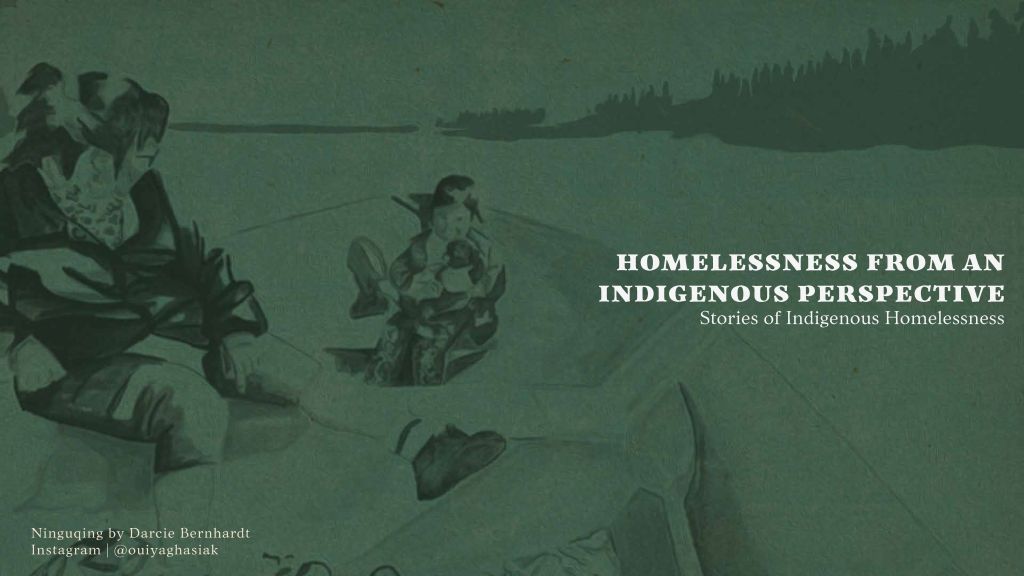
The visual direction also drew from Indigenous art and documentary influences that supported a relational, person-centred tone. That helped the film carry both beauty and honesty without feeling polished for the sake of polish.
In the end, the camera did not try to control the story. It stepped back enough to let people meet each other.
From Screen to Room (The Theatrical Release)
A project like this was never meant to live only online. It was built to bring people together in a room, create reflection, and open the door for real conversation.
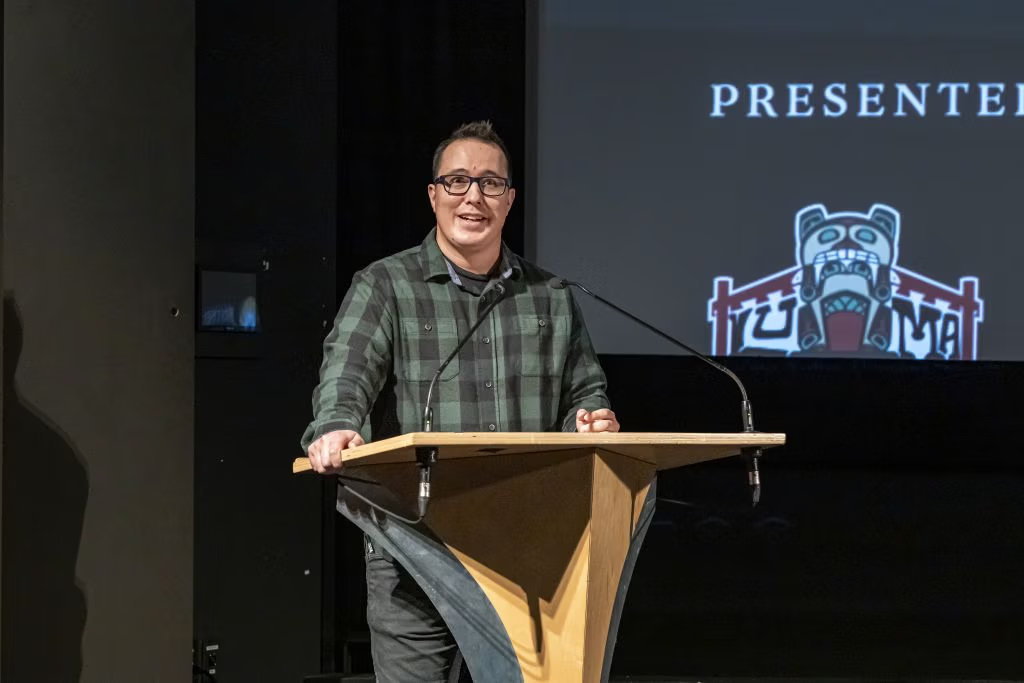
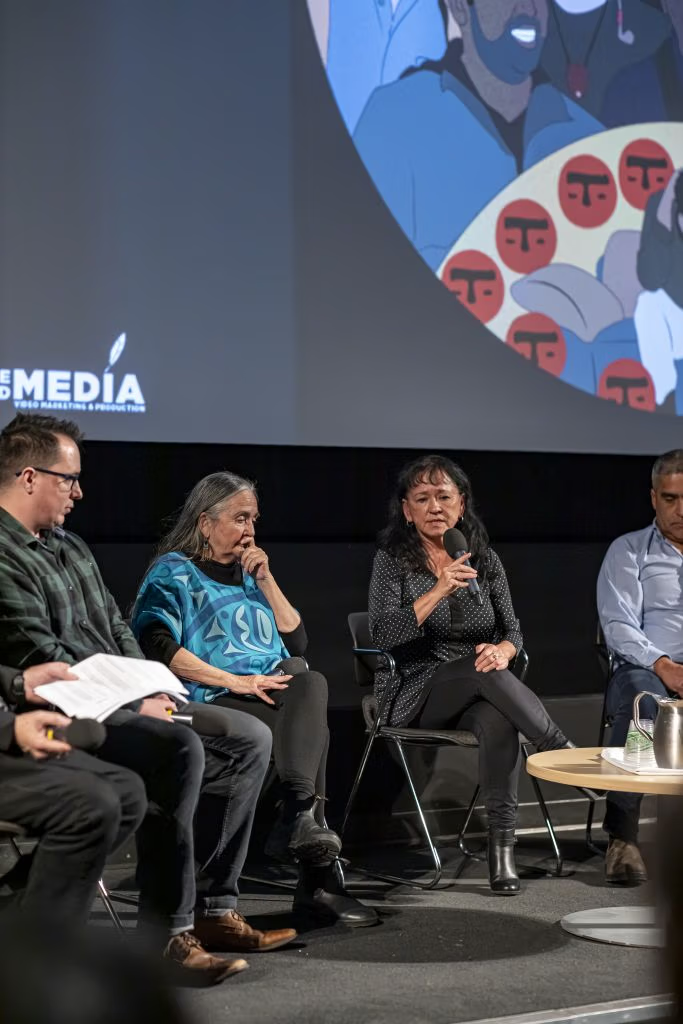
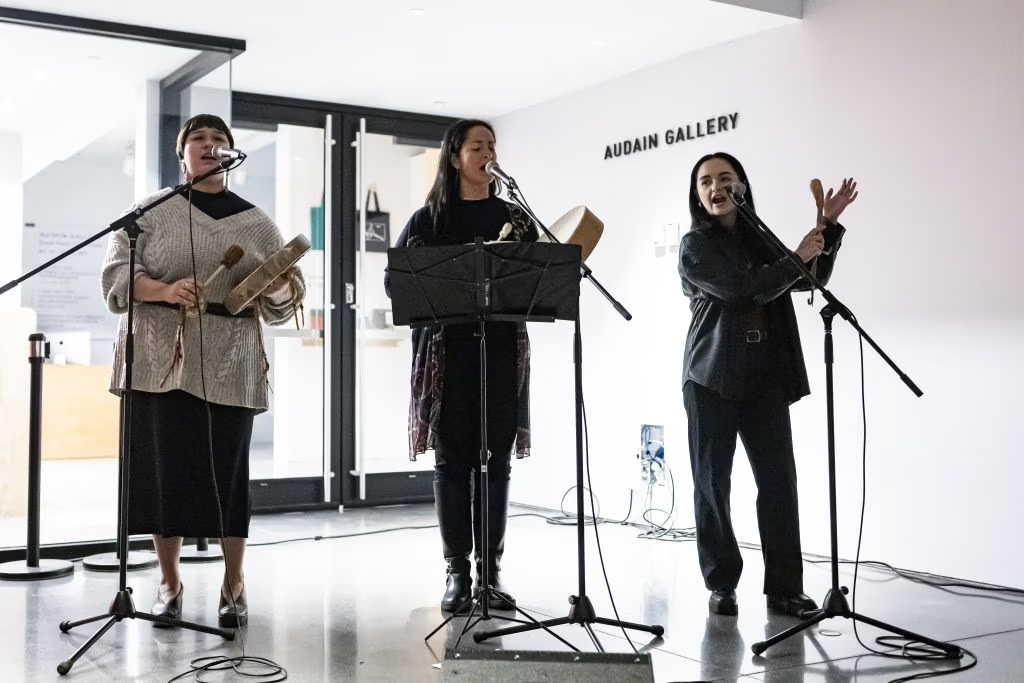
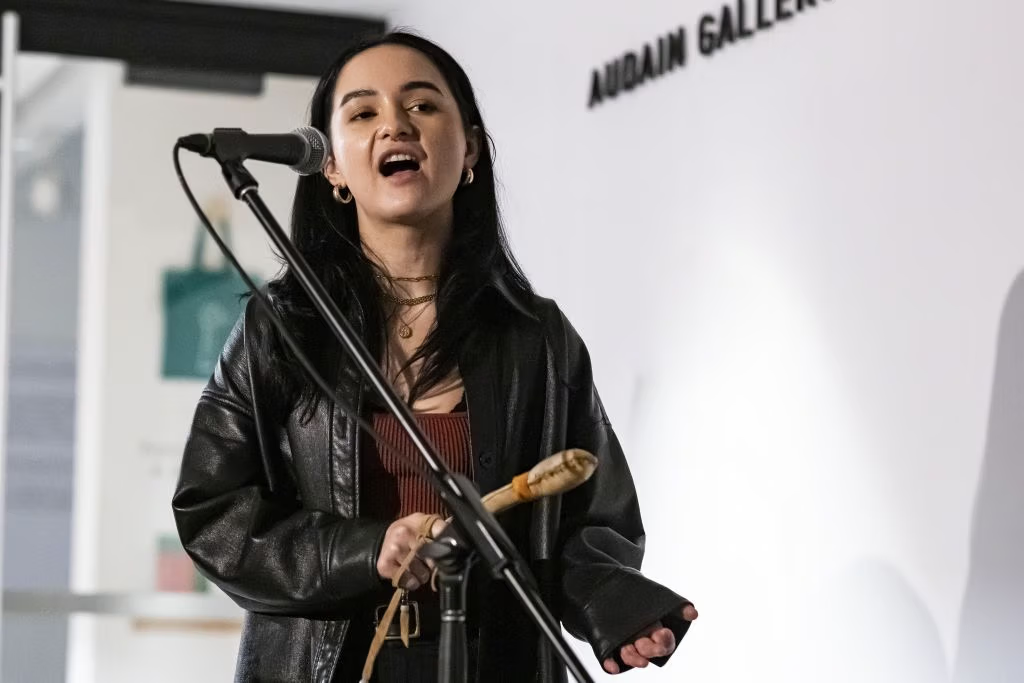
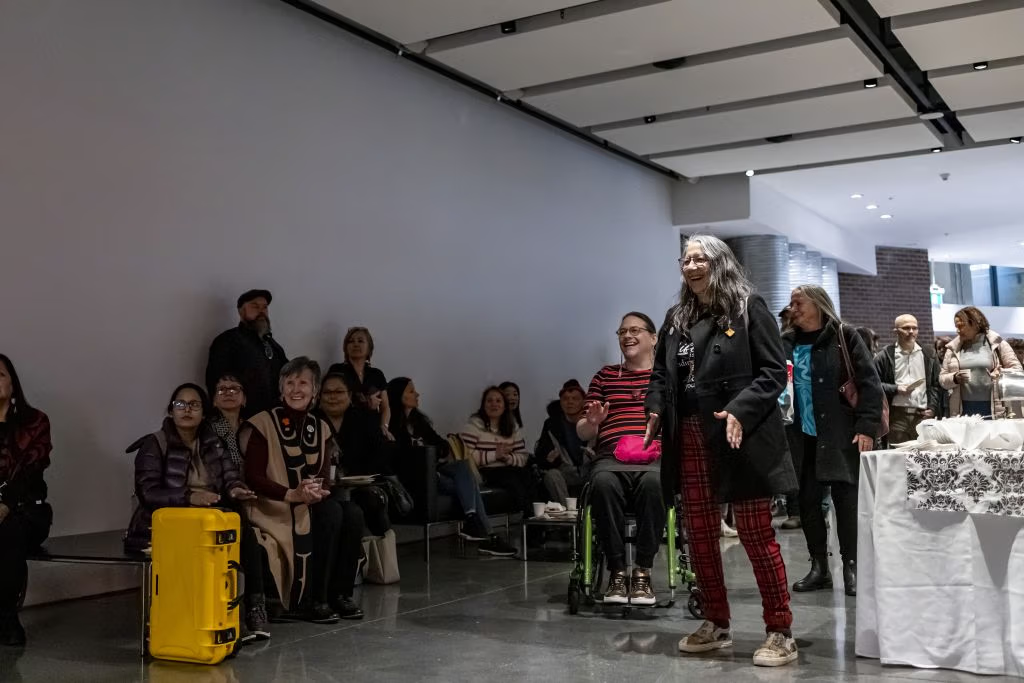
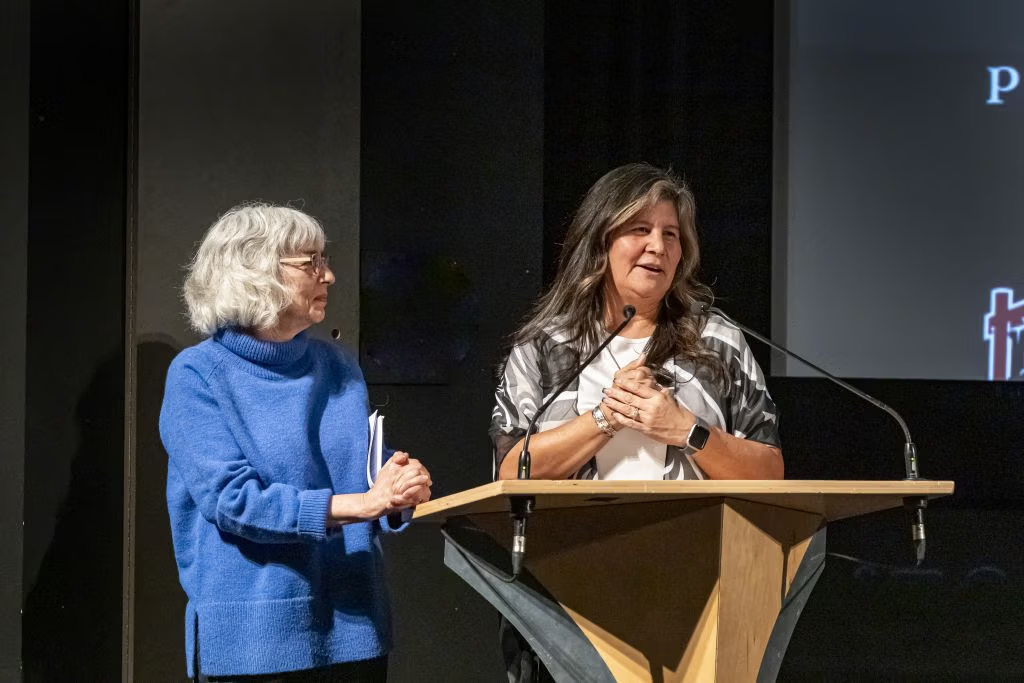
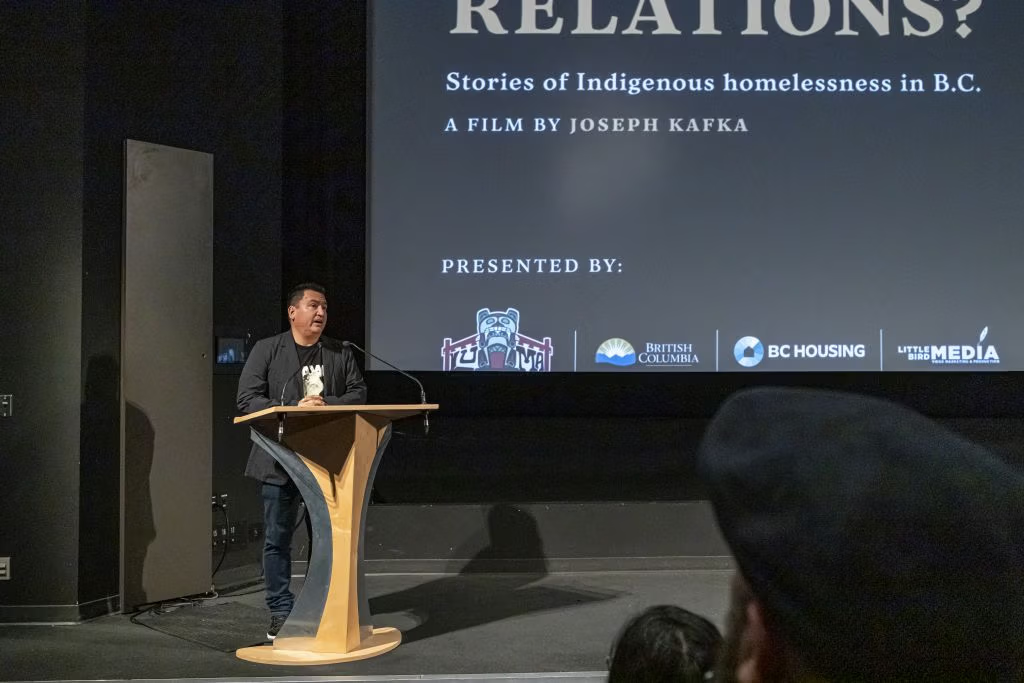
That came to life on Sunday, November 19, 2023, when Lu’ma Native Housing Society hosted a public screening of Where Are All My Relations in Vancouver at the Goldcorp Centre for the Arts at Simon Fraser University’s historic Woodward’s building. The event brought the film to a live audience of roughly 300 people, giving the story a deeper kind of reach than a simple upload ever could.
For our team, this was an important milestone. It showed that the work could hold attention in a theatre setting and create space for people to sit with the message together. After the screening, Joseph Kafka, the film’s director and producer, delivered a written speech and took part in the panel discussion. That added another layer of care to the event, because the conversation did not end when the credits rolled.
In the end, the theatrical release helped turn the documentary into more than a film. It became a shared community experience, and that is where work like this can have some of its deepest impact.
The Results
The true impact of this project was never going to live in a spreadsheet. It lived in the room, in the silence after the film ended, and in the conversations that followed.
This film gave people a different way to encounter Indigenous homelessness in British Columbia. Not as a headline. Not as a statistic. But as something human, lived, and deeply connected to relationships, identity, culture, and home. That shift is what gave the project its weight.
For policymakers, housing leaders, service providers, and community members, the film became more than something to watch. It became something to sit with. Something to learn from. Something to carry into deeper conversations about healing, responsibility, and Indigenous-led solutions. Instead of pushing the audience away with abstract language, it invited them closer through story, voice, and lived experience.
That impact carried into the theatrical release, where people gathered in one room to witness the film together and continue the conversation afterward. It also carried beyond the screening itself. Today, the film lives on the Lu’ma Native Housing Society website, where it remains available as a lasting resource for education, reflection, and public dialogue.
So while this project was never about metrics, its impact is still clear. It helped open hearts, deepen understanding, and give important conversations a place to begin and keep going. That is the kind of result that stays with people.
A Few Lessons From This Project
Projects like this leave lessons behind if you are paying attention.
First, interview style can change everything. A direct-to-camera setup can create a level of trust and closeness that a standard interview often cannot.
Second, sensitive subjects need restraint. Good storytelling does not decorate pain. It makes room for truth, dignity, and context.
Third, collaboration matters even more when the stakes are high. When the right people help guide the work, the final result is stronger and more respectful.
Fourth, long-form and short-form content work best together. One gives the story depth. The other helps it travel.
Fifth, values should guide creative choices. When the themes are clear from the start, the work stays grounded even when the subject is complex.
The biggest lesson is simple: how you tell the story matters just as much as the story itself.
Ready to Build Something Like This?
If your organisation needs to tell an important story with care, we can help you do it the right way. That might look like a documentary, a community-centred video series, or a public-facing project that needs trust at every step.
At Eagle Vision Agency, we bring a calm process, clear direction, and strong visuals to the table. We listen closely, stay grounded, and help turn complex stories into something people can truly connect with. Contact us to start the conversation.