
The Muse Storytelling Process: How We Build Stories That Actually Move People

Discover how the Muse Storytelling process shapes videos and blogs that feel real, build trust, and guide your audience to take action.

The Compass

TL;DR: The Muse Storytelling Process

  1. Muse Storytelling is our core framework for building videos and blogs that guide the heart first, then move the mind to take action.
  2. Every story rests on four pillars People, Place, Purpose, and Plot so your content feels human, grounded, and easy to follow.
  3. We start with Storyfinding listening, research, and workshops to uncover the right characters, real-world settings, and a clear purpose before we ever hit record or write.
  4. The six Plot points Hook, Ask, Acceptance, Hurdles, Answer, and Jab give each project a strong arc that keeps your audience watching or reading to the end.
  5. You get a repeatable story system that works across brand films, case studies, web pages, and SEO blogs so all your marketing feels consistent and real.

When you hire a video or content agency, you are not just buying a camera, a script, or a blog post. You are trusting someone with your story.

At EV Agency, we do not leave that story to guesswork or “creative mood.” We use a proven system called Muse Storytelling, developed by Patrick Moreau. It is the backbone of how we plan videos, shape documentaries, and even outline long-form blog articles.

Think of it like a trail map.

Muse Storytelling gives us a clear route from “rough idea” to “finished story” so your audience feels something real and then takes action.

In this guide, we will walk you through what the Muse Storytelling process is, how it works, and how we use it with our clients across video, branding, and content.


What Is the Muse Storytelling Process?

Muse Storytelling is a step-by-step way to build powerful stories that are intentional, emotional, and grounded in real people. It grew out of years of filmmaking in the field, research into how people think and feel, and teaching workshops around the world.

The people who built Muse spent more than a decade testing, refining, and trying to “break” the process. It kept holding up. The same structure has helped produce award-winning films, national campaigns, and community stories that catch fire.

At the heart of Muse Storytelling is a simple idea:

Guide the heart to move the mind.

Instead of pushing a message at people, we first help your audience feel connected to a real human story. Once their heart is engaged, their mind is open. That is when your purpose, offer, or call to action actually lands.

Muse Storytelling does this through four core pillars:

  • People

  • Place

  • Purpose

  • Plot

We will break those down in a moment. But first, it helps to understand why story matters so much in the first place.

Why Story Hits Harder Than Plain Information

Humans have used story to share knowledge long before written language. We sat around fires and told stories about the hunt, about danger, about love and loss. Story was our first user manual for life.

Even today, your brain treats story as a survival tool:

  • We remember stories better than bullet points.

  • We imagine ourselves inside the story and test choices in our mind.

  • We copy what we see when it moves us.

Research has shown that character-driven stories can trigger hormones like oxytocin, which is linked to empathy and trust. When the character hits real conflict, we also get a spike of cortisol, a stress hormone that makes us focus.

That mix of connection and tension is powerful. It is exactly what Muse Storytelling is designed to build on purpose.

In short:

  • Data informs people.

  • Story moves people.

If your marketing, brand film, or blog content is not built as a story, you are likely leaving emotion, attention, and sales on the table.


The Four Pillars of Muse Storytelling

The core of Muse Storytelling is four pillars that every strong story rests on:

  1. People – who we follow

  2. Place – where the story lives

  3. Purpose – why the story matters

  4. Plot – how the story unfolds

You can think of them like the main points on a compass. If one is missing, your story wanders. When they work together, you get a clear, powerful journey.

Let us go pillar by pillar.


1. People: The Heart Of The Story

Every story needs a Heart – the main person we follow. People are the characters who let your audience connect. We do not connect to logos or buildings. We connect to specific humans with real struggles, hopes, and flaws.

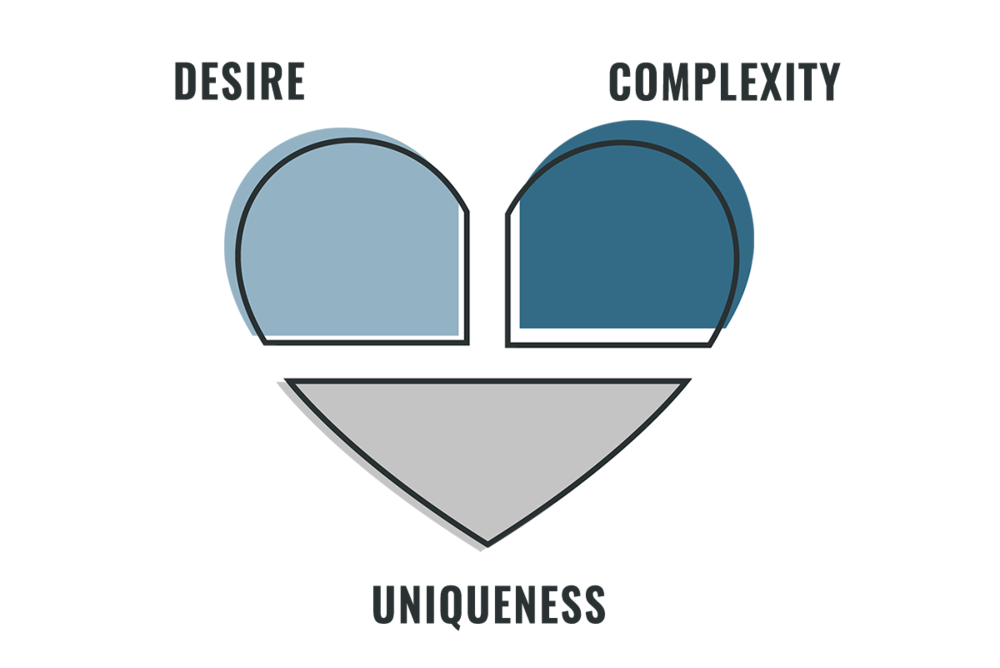
Muse Storytelling looks for three things in a strong main character, called The Big 3:

  1. Uniqueness

    • What makes this person different?

    • Maybe they are the only Red Seal welder on a remote river project. Maybe they are a founder who used to be a teen parent.

    • Uniqueness catches attention.

  2. Desire

    • What does this person want more than anything in this story?

    • It could be “protect my community’s drinking water” or “build a business that hires local youth.”

    • Desire is what your audience hooks into and roots for.

  3. Complexity

    • Why does this matter so much to them?

    • Complexity is the backstory, the hard choice, the tension that gives the character depth.

    • It keeps people invested when things get tough.

In our work, we look for clients and community members who carry The Big 3. Then we build the story around them instead of around the brand.

Helpers and experts

Muse Storytelling also uses two other character types:

  • Helpers – People who support the Heart, fill gaps in the story, or show community around them.

  • Experts – People who bring facts, context, or authority.

In a documentary about river restoration, for example:

  • The Heart might be a local land guardian.

  • Helpers might be youth volunteers or elders.

  • Experts might be a biologist or engineer.

In a brand story for your company:

  • The Heart might be a customer or a founder.

  • Helpers might be staff, partners, or family.

  • Experts might be industry leaders or researchers.

Muse Storytelling keeps all these people focused on one goal: carrying your audience to the purpose of the story.


2. Place: The World Your Story Lives In

Next up is Place. Place is where your story happens. It is not just “background.” It is proof. It shows your audience that this story is real.

Muse Storytelling breaks Place into four layers:

  1. Environment – The larger setting

    • A remote job site, a busy downtown shop, a greenhouse full of native plants.

  2. Objects – Things that matter

    • A worn-out hard hat, a drum, a cracked phone, a hand-drawn map taped to a wall.

  3. Situations – Live moments

    • A safety meeting, a family dinner, a late-night edit session, a team racing a storm to finish a job.

  4. Time – When it happens

    • Dawn, the height of flood season, the last day before a big deadline.

When we plan a shoot or outline a blog, we look for Places that show Uniqueness, Desire, and Complexity without us saying a word.

Good Place lets the viewer “do the math” on their own. It helps them trust what they see, instead of feeling like they are being sold to.

Place also helps us spot inconsistencies. If someone says they care about safety, but their shop is a mess, that tension is part of the real story.


3. Purpose: What You Want To Leave Behind

Every story needs a Purpose. This is what you want your audience to walk away with once the video ends or the article ends.

Your purpose might be:

  • Get people to sign up for a program

  • Shift how a community sees an issue

  • Build trust in your brand

  • Move someone to reach out and ask for a quote

In Muse Storytelling, the purpose usually starts with an early spark. Maybe you saw a problem, felt angry about an injustice, or were asked by a client to make a piece of content. That early spark grows into a clear, intentional purpose.

To keep the purpose sharp, Muse Storytelling uses five keywords:

  1. We brainstorm a big list of words tied to your story, audience, and goals.

  2. We group them into clusters.

  3. We pick five key words that best capture what the story should feel like and say.

Those five keywords become a filter for every creative choice. They guide how we choose characters, locations, music, pacing, and even blog titles and pull-quotes.

Change one keyword and you often change the whole story.


4. Plot: The Structure That Keeps People Watching

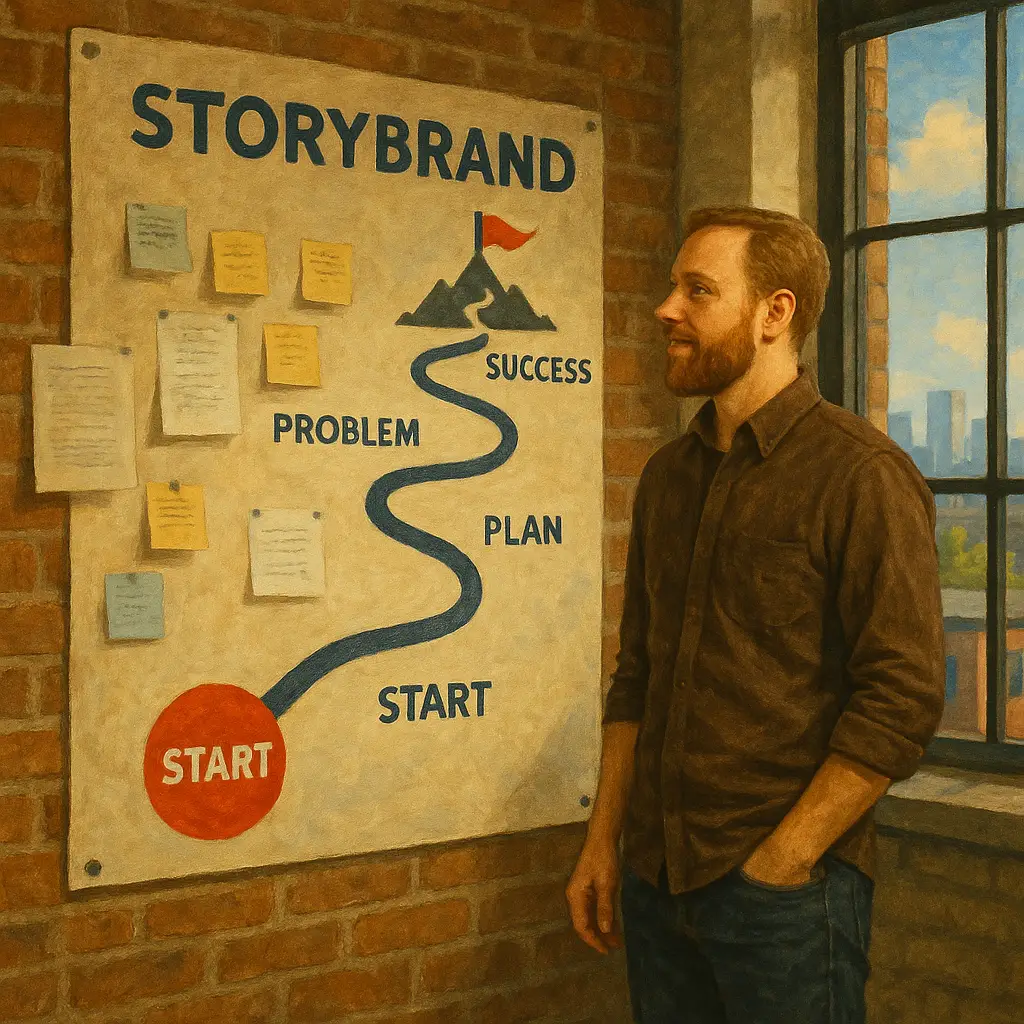
The last pillar of Muse Storytelling is Plot. Plot is the structure that carries your audience from the Heart of the story to the Purpose.

Muse Storytelling uses six Essential Plot Points:

  1. Hook – The moment that pulls us in

  2. Ask – The challenge or conflict the Heart faces

  3. Acceptance – The moment the Heart chooses to take on that challenge

  4. Hurdles – Setbacks and obstacles on the journey

  5. Answer – How the challenge turns out

  6. Jab – The final message or takeaway that hits home

The Ask, Acceptance, and Answer form the Core Question of the story: “Will this person get what they want?”

  • The Ask introduces the problem.

  • The Acceptance shows the decision to act.

  • The Answer shows whether they succeed or fail and what they learned.

The Hook grabs attention without giving away the ending. The Hurdles bring doubt back into the story so people lean in again. The Jab zooms out and connects the story to your purpose, whether that is a call to action or a shift in how the viewer sees the world.

This is just as true for a three minute brand film as it is for a four thousand word blog post.


Listening First: Storyfinding Before We Create

A big part of Muse Storytelling is what we call Storyfinding. Before we pick up a camera, open a script, or draft a blog, we listen.

The Muse approach insists that strong storytellers are strong listeners.

That means we:

  • Ask pointed questions instead of small talk

  • Create a safe space so people feel respected and heard

  • Gather different perspectives instead of only talking to the obvious leaders

  • Pay attention to Place to see what it tells us about the people

  • Look for and gently challenge inconsistencies

  • Become participants where we can, so we really understand the world we are filming or writing about

On a practical level, our Storyfinding work at EV Agency often includes:

  • Pre-interviews with clients, staff, and community members

  • Live workshops where we sketch out the People, Place, Purpose, and Plot on a whiteboard

  • Written questionnaires that dig into desires, fears, and turning points

  • Site visits to observe real work in real environments

  • Reviewing past photos, footage, or documents

We also use tools like:

  • A Storyfinding Manual to guide our questions

  • A Strategic Breakdown worksheet to compare different possible stories

  • A Storyfinding Tracker to log key quotes, plot points, and places

All of this helps us make story-first choices instead of falling back on “cool ideas” that do not connect to your real world.


How Muse Storytelling Shapes Your Video Marketing

Now let us bring this into your world.

Here is how the Muse Storytelling process typically unfolds when you hire us for a video project.

Step 1: Discovery and Purpose

We start by asking:

  • Who are you trying to reach?

  • What do you want them to do after they watch?

  • What needs to shift in their heart or mind?

We turn your answers into a clear purpose and five keywords. These keywords set the tone for everything that follows.

Step 2: Storyfinding With People and Place

Next, we run Storyfinding sessions:

  • We identify potential Hearts (main characters) who have Uniqueness, Desire, and Complexity.

  • We look for Helpers and Experts who can add depth and clarity.

  • We map out key Places and moments where their story truly lives.

This can look like:

  • Sitting in a shop office hearing how a business almost failed and came back

  • Walking a job site at dawn to see the crew start their day

  • Meeting with a customer who explains how your work changed their life

Step 3: Building the Plot Map

Once we understand the People, Place, and Purpose, we design the Plot:

  • Pick the Hook that will start strong

  • Define the Ask and Acceptance that form the Core Question

  • Identify Hurdles that will keep people watching

  • Choose an Answer that feels honest and earned

  • Craft a Jab that ties back to your brand and purpose

We share this structure with you in plain language. No fancy film jargon. You will know exactly what story we are telling and why.

Step 4: Production That Serves The Story

On set, Muse Storytelling keeps us focused:

  • We choose locations that shine a light on your Heart’s Big 3.

  • We film real situations instead of staged scenes where possible.

  • We capture objects and details that support your keywords.

Our team is not just chasing pretty shots. We are collecting the right puzzle pieces for the story we already mapped.

Step 5: Editing To Guide The Heart, Then The Mind

In post-production, Muse Storytelling gives us a clear trail to follow:

  • We check every scene against the Plot map.

  • We cut anything that does not serve the story or the purpose.

  • We use voiceover, interviews, and on-screen text only where Place cannot tell the story on its own.

By the end, you get a video that:

  • Feels honest

  • Honors the people involved

  • Keeps attention from start to finish

  • Naturally points toward your call to action


How We Use Muse Storytelling In Blog Writing And Content

Muse Storytelling is not just for film. At EV Agency, we also adapt the Muse Storytelling process for our blog and content work.

Here is how that looks.

People in written content

For a blog, the Heart may be:

  • A client or customer we feature

  • A team member we follow through a day

  • Or sometimes the reader themselves

We still look for The Big 3:

  • What is unique about this person or audience?

  • What do they want right now?

  • What is the deeper reason it matters?

This helps us write content that speaks to real pressure and not vague marketing buzzwords.

Place in your articles

We bring Place into blogs by:

  • Opening with a vivid scene (a job site, a late night in the office, a tough client meeting)

  • Using concrete examples and settings instead of only theory

  • Showing the environment, tools, and moments that make your world real

Instead of saying “Running a small business is hard,” we might describe a tired owner closing the shop at 10 pm after a long day, then checking emails in their truck.

That is Place doing its job.

Purpose for SEO and business goals

When we plan a blog, we align two layers of Purpose:

  1. Business Purpose

    • Generate leads

    • Educate prospects

    • Support a sales conversation

  2. SEO Purpose

    • Focus keyword (like “Muse Storytelling”)

    • Related phrases and questions

    • Internal links to your core service pages

We still use five keywords to guide tone and structure (for example: practical, grounded, hopeful, expert, local).

Plot in long-form content

We structure long blogs using the same six Essential Plot Points:

  • Hook – The opening scene or bold statement that makes people stop scrolling

  • Ask – The problem or question your reader is facing

  • Acceptance – The moment they decide to look for a better way

  • Hurdles – The common mistakes, fears, and roadblocks we walk them through

  • Answer – The clear path, framework, or process we explain

  • Jab – The final section that connects back to your brand and invites next steps

When you read this article from top to bottom, you are moving through that same structure. The focus keyword Muse Storytelling sits inside a clear story about why it matters and how we use it with you.


Why This Process Matters For You As A Client

You might be thinking, “This all sounds nice, but what does it actually do for my business?”

Here is what using Muse Storytelling gives you:

1. Clarity instead of confusion

Because we map People, Place, Purpose, and Plot before we create, you get to see the story plan upfront. That cuts down on surprise edits and “this does not feel like us” moments.

2. Content that feels real, not staged

Muse Storytelling teaches us to listen, notice Place, and let the real world show through. That is how your videos and blogs end up feeling grounded and human.

3. Emotional impact that leads to action

By guiding the heart first and then moving the mind, Muse Storytelling helps your audience feel connected and then respond. That response might be a donation, a share, a booking, or a purchase.

4. A repeatable framework for future projects

Once we build your story system with Muse Storytelling, we can reuse it across campaigns:

  • Brand films

  • Case study videos

  • Landing pages

  • Long-form SEO blogs

  • Email nurture sequences

Everything lines up. The story stays consistent.


What It Feels Like To Work With A Muse Storytelling Agency

Working with us is not like handing off a brochure and hoping for the best. It feels more like planning a backcountry trip together.

Here is the basic path:

  1. Basecamp – Discovery call, goals, and purpose

  2. Trail mapping – Storyfinding sessions and Muse Storytelling breakdown

  3. Packing your kit – Shot list, interview plan, or blog outline built around the four pillars

  4. Hike day – Filming or drafting with flexibility, but guided by the story map

  5. Campfire review – Edit reviews where we check every choice against your purpose and five keywords

  6. Trail markers for next time – Clear takeaways so future content fits the same story

By the end, you do not just get one nice video or article. You get a shared language for story that you can use inside your own team as well.

Need help choosing your next step? Get in touch with the marketing outfitters at EV Agency. We’ll help you chart the path—and walk it with you.

FAQ: Muse Storytelling

Muse Storytelling is a clear process for building stories that move people. It uses four pillars: People, Place, Purpose, and Plot to design videos and content that feel real, stay engaging, and lead to a clear takeaway.

A normal brief often lists messages and features. Muse Storytelling digs deeper. We spend time finding the right Heart, mapping real places, defining five keywords for your purpose, and building a plot that pulls people through from hook to final message.

Because people connect to people. Character-driven stories tap into empathy and action. Muse Storytelling uses that by building stories around a strong Heart with clear Uniqueness, Desire, and Complexity.

Yes. We use Muse Storytelling in sectors like construction, energy, and restoration. The process helps uncover human stakes inside complex work, then explains the technical side in a way regular people can follow.

For blogs and written content, Muse Storytelling helps us:

  • Choose the right angle and hook

  • Keep the reader engaged with a clear story arc

  • Tie the focus keyword, like “Muse Storytelling,” to real world challenges and solutions

  • End with a strong, natural call to action

This makes your SEO content both search friendly and human friendly.

You do not need a full script. Just bring:

  • Your goals

  • Your best guess at who your audience is

  • Any key people or stories you think matter

We will guide you through the Muse Storytelling process from there.

Keep Growing • More Dispatches from Basecamp